Voyagers received a wonderful welcome at Semester at Sea’s final port during a small reception with Moroccan students and U.S. diplomatic officials at the U.S. Cultural Center in Casablanca.
Twenty-five students, faculty, staff and lifelong learners socialized, danced and got to know more than two dozen Moroccan students, who ranged in age from recent high school graduates to college students, and young professionals. The groups were joined by U.S. Consular General Elizabeth Millard and Jack Rusenko, president of Global Education and board president of George Washington Academy, a K-12 school with American accreditation that is based in Casablanca.
“It was a really great event. We had a lot of opportunities to speak with the Moroccan students one-on-one and to ask them questions about life in Morocco, especially for the women—like dating and marriage,” said Emily Conrique, a lifelong learner on the SAS Summer Voyage, who is a high school teacher in San Diego.
Emily and other members of the Semester at Sea group were treated to live Moroccan music and fed a number of delicious Moroccan pastries and traditional mint tea.
As a teacher, Emily said she was struck by the differences in the education system. For example, high school students in Morocco must choose a major while in high school from either economics, science or math. Once in college they can switch or adapt their interests within their major from high school. Many Moroccans, Emily learned, major in English.
Baron Yeh, a student at Simon Fraser University in Vancouver, British Columbia, said the welcome reception was one of the best events he had attended with Semester at Sea specifically because it allowed him to have more personal and open conversations with Moroccans than he may have otherwise had.
“I really got to have good conversations about education and the ‘green’ movement and how they are happening and impacting people in Morocco,” said Baron. “It was a wonderful way to begin my time in Morocco and a nice way to learn about the country and its people.”
Click on the video below to catch a glimpse of the reception.
Thursday, August 13, 2009

Saturday, August 8, 2009
Shipboard Auction is a Success
Semester at Sea’s annual shipboard drive got off to a strong start thanks to the more than $25,000 raised in a recent one-day shipboard auction.

Students, staff and faculty bid in both silent and live auctions organized throughout the day and evening. Many in the shipboard community—including the captain and crew—as well as parents of students donated each of the 127 items that were up for bid.
“Students started working on the auction from the first week we were on the sh ip, and really put a lot of time into it, so we really happy with how it all turned out,” said Jenny DeLuna, a living-learning coordinator who oversaw the work on the auction.
Auction items were as small as a pizza and movie night and as large as a weeklong stay at a home in Nicaragua. The money raised during the auctions is the largest amount to date among recent summer voyages, surpassing Summer 2007 and Summer 2008. All funds raised go to t he Semester at Sea Annual Fund, which supports student scholarships and on-ship programs.
“We had a lot of late nights to make sure we had it all together and, in the end, the goal was achieved,” said student Jason Morton, who was instrumental in organizing the event. "So, we had fun and did some good at the same time."

Students, staff and faculty bid in both silent and live auctions organized throughout the day and evening. Many in the shipboard community—including the captain and crew—as well as parents of students donated each of the 127 items that were up for bid.
“Students started working on the auction from the first week we were on the sh
 ip, and really put a lot of time into it, so we really happy with how it all turned out,” said Jenny DeLuna, a living-learning coordinator who oversaw the work on the auction.
Auction items were as small as a pizza and movie night and as large as a weeklong stay at a home in Nicaragua. The money raised during the auctions is the largest amount to date among recent summer voyages, surpassing Summer 2007 and Summer 2008. All funds raised go to t
 he Semester at Sea Annual Fund, which supports student scholarships and on-ship programs.
“We had a lot of late nights to make sure we had it all together and, in the end, the goal was achieved,” said student Jason Morton, who was instrumental in organizing the event. "So, we had fun and did some good at the same time."
This Crew’s Got Talent
Never underestimate the singing chops of your cabin steward. And, appreciate the funky dance moves of the busboy and helpers in the dining hall. Students on the summer voyag e certainly did. The talent among the crew surprised and thrilled students and staff during the annual evening performance.
“I really enjoyed it. I was surprised the crew could sing so well,” said Sharon Hornstein of UConn.
Students could hear the crew practicing for several days behind closed doors—strumming their electric guitars and the thump-thump of hip-hop music. During the night of the performance they heard the smooth crooning voice of longtime crew member Vic Adobo, who belted out a wonde rful rendition of Lionel Ritchie’s “Lady”. The hit for many students were the hip-hop dancing routines by steward cabins and dining hall staff.
“Usually when I see them around they’re always working all the time, so, it was nice to see them having fun,” said st udent Nathan Pearson, who attends West Virginia University. Vic was Nathan’s favorite act. “He was really good. He just got up there and really belted out those love songs.”
 e certainly did. The talent among the crew surprised and thrilled students and staff during the annual evening performance.
“I really enjoyed it. I was surprised the crew could sing so well,” said Sharon Hornstein of UConn.
Students could hear the crew practicing for several days behind closed doors—strumming their electric guitars and the thump-thump of hip-hop music. During the night of the performance they heard the smooth crooning voice of longtime crew member Vic Adobo, who belted out a wonde
 rful rendition of Lionel Ritchie’s “Lady”. The hit for many students were the hip-hop dancing routines by steward cabins and dining hall staff.
“Usually when I see them around they’re always working all the time, so, it was nice to see them having fun,” said st
 udent Nathan Pearson, who attends West Virginia University. Vic was Nathan’s favorite act. “He was really good. He just got up there and really belted out those love songs.”
Friday, August 7, 2009
Reflections on Egypt
Without question, Egypt was a memorable experience for the majority of the students aboard of the summer voyage. How can one not be humbled when viewing the Great Pyramids or the 4,000-year-old paintings inside the stone temples that still have some very vibrant colors. Several students had the fortune of sharing the experience with their parents who participated in the SAS-organized Parent Tour to Egypt. Some learned the true meaning of the voy age’s theme, not from their instructors, but from their interactions with Egyptians. A few students of Egyptian descent visited family, with one student—Amira Yousef—seeing her relatives for the first time in 10 years. As we sail to our final destination before heading back to the U.S., several SAS students shared their experiences from Egypt. While this is a longer blog entry, the students’ reflections are engaging, heartfelt and well worth the read. Enjoy!
Sunrise at the Great Pyramids
Jon Simmons, UConn
Words cannot describe the splendor of the Great Pyramids. Soaring heavenward with blocks nearly matching my 6’1” frame, they dominate the skyline. Even in the hazy half light of morning they seem to gleam all on their own. As the sun slowly rose up behind the pyramids, each ray illuminated the monuments and highlighted the simple beauty and power of these structures.
Standing at the base of a pyramid, one can’t help but feel a sense of smallness. The pyramids have conquered the test of time and modern machinery. I feel honored to be a visitor here, like I have joined the ranks of a group—a group that has come to enjoy the majestic power and splendor of the pyramids of Giza.
On Experiencing Egypt
Timothy Jones II, Morehouse College
Egypt has truly been both a liberating and exhilarating experience. The stories o f the people of the Nile and the ancient temples embellished with hieroglyphics that I have studied in class are no longer just pictures in some book. Instead, they are real people and places with a timeless history. I have eaten their food, walked in their steps, and admired their culture. These pyramids and giant temples have withstood the test of time and embedded within each brick and stone there is a history greater than my own. It’s the history of a people—my people—your people. In experiencing Egypt, I have come to the conclusion that we have come to a place where we can stand amongst the giants—the great pyramids. In doing this, we open ourselves up to truly understanding past, present, and new stories that are meaningful moments captured in time.
The Temple of Abu-Simbel
Jessica Kenyon, Lenoir-Rhyne University (N.C.)
Visiting the Temple of Abu Simbel was definitely my favorite part of my trip to Egypt. I had no idea what or where Abu Simbel was before we got there, but now I’ll never forget it. When we first arrived I was thinking, “Oh, it’s just another temple.” But seeing the Great Temple honestly blows the others out of the water. I am still fully impressed by the Karnack and Luxor temples, but nothing can top Abu Simbel.
Abu Simbel is where Pharaoh Ramsses II built a temple for himself and his queen, Nefertari. In the 1960s, UNESCO had to literally move a mountain to sav e the temple from the rising waters of Lake Nasser because of the building of the Aswan High Dam. Hearing that a mountain was literally moved in order to save the temple was unbelievable. I mean people just don’t go around moving mountains. They had to take apart the temple stone by stone and move it to a higher location to rebuild it. (The original location is underwater today. The water is still very visible from the Great Temple's new location.)
Our tour guide told us that when they rebuilt the Great Temple during the move they had to align it so that the sun would still shine on the face of the statue there. Today, this is visible on February 22nd and October 22nd. We weren’t allowed to take pictures inside, but walking inside the Great Temple and seeing all of the hieroglyphics and carvings that are still visible to this day was breathtaking.
Just to listen to the history behind the temple and then to be able to walk inside and see it for myself, it's unlike anything else.
Egypt’s Lesson on Social Justice
Colby Melvin, Spring Hill College (Ala.)
My tour guide in Egypt, “Mr. Tito”, changed my outlook on the world. He was assigned to lead our small group by travel agency that organized an independent tour for us in Egypt. The stories Tito shared with me made me realize why human rights and social justice—the theme of this voyage—are such important issues.
Tito was incredibly gracious and generous throughout our days together, giving us free t ours around the city, seeing that we caught our train to Luxor, and texting me to make sure we all arrived safely. During a dinner on the Nile he even paid for a cake and had the band sing happy birthday to someone in our group who was celebrating a birthday. We learned that it was Tito’s 30th birthday the next day and included him in the festivities. But we were concerned that our new friend—who was so jovial the day we first met—seemed rather distant and removed despite the celebrations.
Then he revealed his story.
Two years ago Tito fell in love. However, he told us that, in the Muslim culture marriage is not solely based on love. Typically, a man buys an apartment and pays the father a price for his daughter. If the father accepts the daughter must marry the man. If she doesn’t it is considered a great dishonor to the family. Tito’s love had been “purchased” by someone else and, unfortunately for Tito, she chose honor over love. Two years later, he’s still in love with her and feels a sense of helplessness. He has tried to move on. He has applied for visit to study in the U.S., but has been denied every time. He wants to find a woman he loves before he marries her, something that is against the norms of Muslim culture. His family is pressuring him to get married. And his conflicting view has estranged him from his family. He feels trapped in a culture that he doesn’t agree with and sees no way out.
I have never imagined or experienced this internal struggle. I always thought love was a basic human freedom. I have the freedom to be and be with who I want and to live the life I desire. Tito doesn’t. It is hard to tell a man to keep looking to the future in a culture that is so focused and keeping him back.
I am so grateful to have met Tito. He has taught me to be grateful for the things we often take for granted—the many “freedoms” we have as Americans.
Parent-Student Travel in Egypt
Kate O’Hara, Nichols College (Mass.) & her dad
Keith O’Hara (Dad): I came to Egypt because I missed my daughter and because Egypt was on my top 10 list of places I wanted to visit. The voyage’s theme was also really important to me. This is my first extensive period in an Islamic country and it has been very eye opening and interesting. For me, it’s all about the opportunity to walk the talk about human rights, which starts with learning. And the adventure of it all is wonderful. The guides are truly Egyptologists who give us a cultural, historical perspective. It’s all very exciting. Sharing this time with my daughter, to listen to her recount all of the stories from the other countries truly makes this an unforgettable and touching trip for me.
Kate O’Hara (Daughter): The parent trip came at a time in the voyage when we all started missing our families. But even more I feel like Egypt is one of the most profound places I’ve been in my life so it was nice to have my dad here to share it with. Seeing all the poverty and the lifestyle changes that are completely opposite of our own was really mindblowing to me. My dad has traveled a lot so I know he’s seen things like this before, but it was nice that he was here with me the first time I got to experience it. We just enjoyed the time together and soaked everything in. For me, seeing the three ancient pyramids with my dad was the most special time. He and I went to the ancient temples in Mexico together when I was 12, so it was kind of cool that we got to do it here, too. Because we have so many children in my family [there are seven kids], it’s been really awesome to have the one-on-one time with my dad.
Reconnecting with Family
Amira Yousef, Cal State Channel Islands
It had been 10 years since I saw my family in Egypt. I was around 11 years old the last time I visited Egypt. There isn’t much I remember of Egypt from that trip, except for seeing the Pyramids and playing with my cousins.
When I found out that Semester at Sea was coming to Egypt I definitely wanted to see them. Nine months ago, I told my family in Egypt that I was coming and there was madness over there; they were really excited that I was coming. This my dad’s family; he is from Egy pt. Aside from my dad and my uncle, no one from his family has ever been to the U.S. I have a couple of uncles and aunts there and lots of cousins.
When we arrived in Alexandria, my uncle was there to pick me up. My mom sent a picture of me so he could recognize me, but I didn’t recognize him so he had to call my name. … Every time I saw a new family member I hadn’t seen in so long, it felt really good to see them.
I visited the pyramids with my cousins, some of whom I had never met and others who I remember playing with in my dad’s village. My uncle also took me to my dad’s village. It was hard going there; it was very hard to see. There were houses still made out of mud there. The people are very poor and living in unhealthy conditions. In a lot of the houses they live with their animals in the same room with them. So, there’s feces on the floor and they’re living there. So it was hard to see my family living in such horrible conditions. It’s a very stark view of poverty, which is very different than what tourists see in the cities like Alexandria and Cairo. My dad’s brother and his wife still live in the village with their kids. And a lot of my cousins live in the village. I probably saw 60 people in that village that I am somehow related to.
My family in the village made a big dinner to celebrate my visit. We had pigeon and duck, which is only cooked for a special occasion. We had a big gathering at the house of the priest of the village, because he’s my dad’s cousin. There were probably 30 people inside that little house. They were all so welcoming to me and so loving.
Even though they hadn’t seen me for 10 years they never lost any love for me at all. I felt so welcome there and I felt like I belonged there. You don’t get that in the states very much for people you haven’t seen in 10 years and only had met one time.
My visit to reconnect with my family really made me want to return soon to Egypt to study Arabic. Because I’m from a family where my mother is from the U.S. and my father is Egyptian and I’m first generation in the U.S., I’ve always felt different from the rest of my friends. I felt like I was missing something. And when I was there in Egypt, I really did feel like I had a connection with all of these people and this is something I need to learn more about. It is my culture and I feel like I need to learn more about that.
 age’s theme, not from their instructors, but from their interactions with Egyptians. A few students of Egyptian descent visited family, with one student—Amira Yousef—seeing her relatives for the first time in 10 years. As we sail to our final destination before heading back to the U.S., several SAS students shared their experiences from Egypt. While this is a longer blog entry, the students’ reflections are engaging, heartfelt and well worth the read. Enjoy!
Sunrise at the Great Pyramids
Jon Simmons, UConn
Words cannot describe the splendor of the Great Pyramids. Soaring heavenward with blocks nearly matching my 6’1” frame, they dominate the skyline. Even in the hazy half light of morning they seem to gleam all on their own. As the sun slowly rose up behind the pyramids, each ray illuminated the monuments and highlighted the simple beauty and power of these structures.
Standing at the base of a pyramid, one can’t help but feel a sense of smallness. The pyramids have conquered the test of time and modern machinery. I feel honored to be a visitor here, like I have joined the ranks of a group—a group that has come to enjoy the majestic power and splendor of the pyramids of Giza.
On Experiencing Egypt
Timothy Jones II, Morehouse College
Egypt has truly been both a liberating and exhilarating experience. The stories o
 f the people of the Nile and the ancient temples embellished with hieroglyphics that I have studied in class are no longer just pictures in some book. Instead, they are real people and places with a timeless history. I have eaten their food, walked in their steps, and admired their culture. These pyramids and giant temples have withstood the test of time and embedded within each brick and stone there is a history greater than my own. It’s the history of a people—my people—your people. In experiencing Egypt, I have come to the conclusion that we have come to a place where we can stand amongst the giants—the great pyramids. In doing this, we open ourselves up to truly understanding past, present, and new stories that are meaningful moments captured in time.
The Temple of Abu-Simbel
Jessica Kenyon, Lenoir-Rhyne University (N.C.)
Visiting the Temple of Abu Simbel was definitely my favorite part of my trip to Egypt. I had no idea what or where Abu Simbel was before we got there, but now I’ll never forget it. When we first arrived I was thinking, “Oh, it’s just another temple.” But seeing the Great Temple honestly blows the others out of the water. I am still fully impressed by the Karnack and Luxor temples, but nothing can top Abu Simbel.
Abu Simbel is where Pharaoh Ramsses II built a temple for himself and his queen, Nefertari. In the 1960s, UNESCO had to literally move a mountain to sav
 e the temple from the rising waters of Lake Nasser because of the building of the Aswan High Dam. Hearing that a mountain was literally moved in order to save the temple was unbelievable. I mean people just don’t go around moving mountains. They had to take apart the temple stone by stone and move it to a higher location to rebuild it. (The original location is underwater today. The water is still very visible from the Great Temple's new location.)
Our tour guide told us that when they rebuilt the Great Temple during the move they had to align it so that the sun would still shine on the face of the statue there. Today, this is visible on February 22nd and October 22nd. We weren’t allowed to take pictures inside, but walking inside the Great Temple and seeing all of the hieroglyphics and carvings that are still visible to this day was breathtaking.
Just to listen to the history behind the temple and then to be able to walk inside and see it for myself, it's unlike anything else.
Egypt’s Lesson on Social Justice
Colby Melvin, Spring Hill College (Ala.)
My tour guide in Egypt, “Mr. Tito”, changed my outlook on the world. He was assigned to lead our small group by travel agency that organized an independent tour for us in Egypt. The stories Tito shared with me made me realize why human rights and social justice—the theme of this voyage—are such important issues.
Tito was incredibly gracious and generous throughout our days together, giving us free t
 ours around the city, seeing that we caught our train to Luxor, and texting me to make sure we all arrived safely. During a dinner on the Nile he even paid for a cake and had the band sing happy birthday to someone in our group who was celebrating a birthday. We learned that it was Tito’s 30th birthday the next day and included him in the festivities. But we were concerned that our new friend—who was so jovial the day we first met—seemed rather distant and removed despite the celebrations.
Then he revealed his story.
Two years ago Tito fell in love. However, he told us that, in the Muslim culture marriage is not solely based on love. Typically, a man buys an apartment and pays the father a price for his daughter. If the father accepts the daughter must marry the man. If she doesn’t it is considered a great dishonor to the family. Tito’s love had been “purchased” by someone else and, unfortunately for Tito, she chose honor over love. Two years later, he’s still in love with her and feels a sense of helplessness. He has tried to move on. He has applied for visit to study in the U.S., but has been denied every time. He wants to find a woman he loves before he marries her, something that is against the norms of Muslim culture. His family is pressuring him to get married. And his conflicting view has estranged him from his family. He feels trapped in a culture that he doesn’t agree with and sees no way out.
I have never imagined or experienced this internal struggle. I always thought love was a basic human freedom. I have the freedom to be and be with who I want and to live the life I desire. Tito doesn’t. It is hard to tell a man to keep looking to the future in a culture that is so focused and keeping him back.
I am so grateful to have met Tito. He has taught me to be grateful for the things we often take for granted—the many “freedoms” we have as Americans.
Parent-Student Travel in Egypt
Kate O’Hara, Nichols College (Mass.) & her dad
Keith O’Hara (Dad): I came to Egypt because I missed my daughter and because Egypt was on my top 10 list of places I wanted to visit. The voyage’s theme was also really important to me. This is my first extensive period in an Islamic country and it has been very eye opening and interesting. For me, it’s all about the opportunity to walk the talk about human rights, which starts with learning. And the adventure of it all is wonderful. The guides are truly Egyptologists who give us a cultural, historical perspective. It’s
 all very exciting. Sharing this time with my daughter, to listen to her recount all of the stories from the other countries truly makes this an unforgettable and touching trip for me.
Kate O’Hara (Daughter): The parent trip came at a time in the voyage when we all started missing our families. But even more I feel like Egypt is one of the most profound places I’ve been in my life so it was nice to have my dad here to share it with. Seeing all the poverty and the lifestyle changes that are completely opposite of our own was really mindblowing to me. My dad has traveled a lot so I know he’s seen things like this before, but it was nice that he was here with me the first time I got to experience it. We just enjoyed the time together and soaked everything in. For me, seeing the three ancient pyramids with my dad was the most special time. He and I went to the ancient temples in Mexico together when I was 12, so it was kind of cool that we got to do it here, too. Because we have so many children in my family [there are seven kids], it’s been really awesome to have the one-on-one time with my dad.
Reconnecting with Family
Amira Yousef, Cal State Channel Islands
It had been 10 years since I saw my family in Egypt. I was around 11 years old the last time I visited Egypt. There isn’t much I remember of Egypt from that trip, except for seeing the Pyramids and playing with my cousins.
When I found out that Semester at Sea was coming to Egypt I definitely wanted to see them. Nine months ago, I told my family in Egypt that I was coming and there was madness over there; they were really excited that I was coming. This my dad’s family; he is from Egy
 pt. Aside from my dad and my uncle, no one from his family has ever been to the U.S. I have a couple of uncles and aunts there and lots of cousins.
When we arrived in Alexandria, my uncle was there to pick me up. My mom sent a picture of me so he could recognize me, but I didn’t recognize him so he had to call my name. … Every time I saw a new family member I hadn’t seen in so long, it felt really good to see them.
I visited the pyramids with my cousins, some of whom I had never met and others who I remember playing with in my dad’s village. My uncle also took me to my dad’s village. It was hard going there; it was very hard to see. There were houses still made out of mud there. The people are very poor and living in unhealthy conditions. In a lot of the houses they live with their animals in the same room with them. So, there’s feces on the floor and they’re living there. So it was hard to see my family living in such horrible conditions. It’s a very stark view of poverty, which is very different than what tourists see in the cities like Alexandria and Cairo. My dad’s brother and his wife still live in the village with their kids. And a lot of my cousins live in the village. I probably saw 60 people in that village that I am somehow related to.
My family in the village made a big dinner to celebrate my visit. We had pigeon and duck, which is only cooked for a special occasion. We had a big gathering at the house of the priest of the village, because he’s my dad’s cousin. There were probably 30 people inside that little house. They were all so welcoming to me and so loving.
Even though they hadn’t seen me for 10 years they never lost any love for me at all. I felt so welcome there and I felt like I belonged there. You don’t get that in the states very much for people you haven’t seen in 10 years and only had met one time.
My visit to reconnect with my family really made me want to return soon to Egypt to study Arabic. Because I’m from a family where my mother is from the U.S. and my father is Egyptian and I’m first generation in the U.S., I’ve always felt different from the rest of my friends. I felt like I was missing something. And when I was there in Egypt, I really did feel like I had a connection with all of these people and this is something I need to learn more about. It is my culture and I feel like I need to learn more about that.
Wednesday, August 5, 2009
Meeting of a Lifetime in Egypt
A group of very lucky Semester at Sea students got the unexpected honor of meeting Egypt’s renowned antiquities expert, Dr. Zahi Hawass, and getting a private tour by him of the Step Pyramid in Saqqara (pronounced “Sakkara”), which currently is closed to the public.
“The feeling of privilege to have a special tour of these places made me feel very special,” said Jinyi (Jenny) Chen, a student at Univ. of Virginia. “There was not much inside, but I am excited for when they finish their work there.”
The students were part of a Semester at Sea three-day tour of Cairo. During part of their tour they visited Saqqara and were standing outside of the Step Pyramid of Pharaoh Djoser (pronounced “Zoser”), which was built by the architect/engineer Imhotep almost 5,000 years ago. The pyramid is still closed to the public and is undergoing some excavations.
The group’s tour guide was a doctoral student of Hawass. Both she and SAS student Nexus Cook recognized Hawass immediately and were quite excited. For Nexus, meeting Hawass was a dream come true.
“I have loved ancient Egypt history since I was a kid and have watched lots of movies about it and read so many books,” says Nexus. “So, for me, seeing Dr. Hawass was like seeing a huge celebrity.”
Hawass has more than four decades studying, inspecting and overseeing the antiquities in Egypt. He is currently Secretary General of the Supreme Council of Antiquities. In this role, he controls all of the antiquities of Egypt and serves as the chief advocate for preserving and protecting Egypt’s ancient monuments. A 2006 profile article in Time magazine dubbed Hawass “The Man”, noting that “he determines who will excavate in Egypt and when and where.” Hawass was President Barack Obama’s guide during the President’s late July visit to Egypt and the pyramids.
In her blog, Nexus Cook, a student at Temple University, wrote the following about the experience and special tour. (It is a bit long, but well worth the read):
Aug. 2—In all sincerity, today was the best day of my life. …Not many people know this, but I am obsessed with ancient Egyptian art, history and culture. I used to, and still, watch every single documentary [about Egypt] on the History Channel, the Discovery Channel, the National Geographic Channel—pretty much any channel that is showing something about ancient Egypt. I have read countless books about all the Gods and hieroglyphics and I seriously used to want to—and still do—be an archeologist and Egyptologist. The Indiana Jones movies are my favorite movies of all time!
When I was younger I used to collect rocks and pretend that I was finding some ancient, lost Egyptian treasure. Basically, I have been looking forward to going to Egypt since I was about 4 years old.
Anyway, today we went to Memphis, which was the first capital of Egypt and the first established city in the entire world. I saw the most amazing statue of King Ramses the Second. Then we went to Sakkara. We get off the bus and are headed towards the first step pyramid and first stone building ever made all over the world and I see all these men yelling and I see a couple camera guys. Then all of a sudden I see my idol—Dr. Zahi Hawass. Dr. Zahi Hawass is the world-renowned archeologist and the most famous Egyptologist in the world.
I have read three of his books and I watch every single documentary that I see on TV with him in it. When I saw him I was literally star struck. I have met celebrities before, quite a few actually, and I have never been star struck, but Dr. Zahi Hawass—a guy that most people don't even know, but should—and I am speechless.
I got over being speechless very quickly and walked over and introduced myself to him. He asked me where I go to school and when I told him Temple University he got excited because he used to live in Philly. I tol d him how excited I was to meet him; I felt like I was skipping through air. My tour guide was the only other person who was just as happy as I was.
Dr. Hawass was at the step pyramids doing a show with one of Egypt’s most famous movies stars, Ramez Galal. So, Grace [Obando, my roommate] and I took a bunch of pictures with him and then were recorded for the show. Galal told us to repeat a phrase in English and Arabic, something like “Traveling the world with Ramez and Egypt’s Indiana Jones, Dr. Zahi Hawass!” I was completely embarrassed/ecstatic because I was standing next to Dr. Hawass!
After all the hype with the cameras, Dr. Hawass quiets everyone down in our group and says “As a special treat for all of you, I will allow you all to go inside the Step Pyramid of Imhotep!” I ALMOST PASSED OUT!! NO ONE IS ALLOWED INSIDE THE STEP PYRAMID. My tour guide, who has been doing her job for 35 years, had never been inside the Step Pyramid of Imhotep. It was like a scene form a movie; I could not believe it! We had our own escort inside the oldest man made building on the planet!!

I watched a man unlock the bolted door that leads inside the pyramid. It was so exclusive that the lights weren’t even on. He had to turn the lights on inside the part we were allowed to walk through. It was truly amazing. I seriously feel so blessed. My group got to go inside an ancient pyramid that very few people are allowed to go in. It was so cool.
Needless to say, I love Egypt. I knew I would, but my time here has surpassed all expectations. I could not have asked for a better time. I am in love with this country, the people, the culture, the history, everything. I had the best time of my life. I don't think anything can top this. And if it does, I might not come back to America.
“The feeling of privilege to have a special tour of these places made me feel very special,” said Jinyi (Jenny) Chen, a student at
 Univ. of Virginia. “There was not much inside, but I am excited for when they finish their work there.”
The students were part of a Semester at Sea three-day tour of Cairo. During part of their tour they visited Saqqara and were standing outside of the Step Pyramid of Pharaoh Djoser (pronounced “Zoser”), which was built by the architect/engineer Imhotep almost 5,000 years ago. The pyramid is still closed to the public and is undergoing some excavations.
The group’s tour guide was a doctoral student of Hawass. Both she and SAS student Nexus Cook recognized Hawass immediately and were quite excited. For Nexus, meeting Hawass was a dream come true.
“I have loved ancient Egypt history since I was a kid and have watched lots of movies about it and read so many books,” says Nexus. “So, for me, seeing Dr. Hawass was like seeing a huge celebrity.”
Hawass has more than four decades studying, inspecting and overseeing the antiquities in Egypt. He is currently Secretary General of the Supreme Council of Antiquities. In this role, he controls all of the antiquities of Egypt and serves as the chief advocate for preserving and protecting Egypt’s ancient monuments. A 2006 profile article in Time magazine dubbed Hawass “The Man”, noting that “he determines who will excavate in Egypt and when and where.” Hawass was President Barack Obama’s guide during the President’s late July visit to Egypt and the pyramids.
In her blog, Nexus Cook, a student at Temple University, wrote the following about the experience and special tour. (It is a bit long, but well worth the read):
Aug. 2—In all sincerity, today was the best day of my life. …Not many people know this, but I am obsessed with ancient Egyptian art, history and culture. I used to, and still, watch every single documentary [about Egypt] on the History Channel, the Discovery Channel, the National Geographic Channel—pretty much any channel that is showing something about ancient Egypt. I have read countless books about all the Gods and hieroglyphics and I seriously used to want to—and still do—be an archeologist and Egyptologist. The Indiana Jones movies are my favorite movies of all time!
When I was younger I used to collect rocks and pretend that I was finding some ancient, lost Egyptian treasure. Basically, I have been looking forward to going to Egypt since I was about 4 years old.

Anyway, today we went to Memphis, which was the first capital of Egypt and the first established city in the entire world. I saw the most amazing statue of King Ramses the Second. Then we went to Sakkara. We get off the bus and are headed towards the first step pyramid and first stone building ever made all over the world and I see all these men yelling and I see a couple camera guys. Then all of a sudden I see my idol—Dr. Zahi Hawass. Dr. Zahi Hawass is the world-renowned archeologist and the most famous Egyptologist in the world.
I have read three of his books and I watch every single documentary that I see on TV with him in it. When I saw him I was literally star struck. I have met celebrities before, quite a few actually, and I have never been star struck, but Dr. Zahi Hawass—a guy that most people don't even know, but should—and I am speechless.
I got over being speechless very quickly and walked over and introduced myself to him. He asked me where I go to school and when I told him Temple University he got excited because he used to live in Philly. I tol
 d him how excited I was to meet him; I felt like I was skipping through air. My tour guide was the only other person who was just as happy as I was.
Dr. Hawass was at the step pyramids doing a show with one of Egypt’s most famous movies stars, Ramez Galal. So, Grace [Obando, my roommate] and I took a bunch of pictures with him and then were recorded for the show. Galal told us to repeat a phrase in English and Arabic, something like “Traveling the world with Ramez and Egypt’s Indiana Jones, Dr. Zahi Hawass!” I was completely embarrassed/ecstatic because I was standing next to Dr. Hawass!
After all the hype with the cameras, Dr. Hawass quiets everyone down in our group and says “As a special treat for all of you, I will allow you all to go inside the Step Pyramid of Imhotep!” I ALMOST PASSED OUT!! NO ONE IS ALLOWED INSIDE THE STEP PYRAMID. My tour guide, who has been doing her job for 35 years, had never been inside the Step Pyramid of Imhotep. It was like a scene form a movie; I could not believe it! We had our own escort inside the oldest man made building on the planet!!

I watched a man unlock the bolted door that leads inside the pyramid. It was so exclusive that the lights weren’t even on. He had to turn the lights on inside the part we were allowed to walk through. It was truly amazing. I seriously feel so blessed. My group got to go inside an ancient pyramid that very few people are allowed to go in. It was so cool.
Needless to say, I love Egypt. I knew I would, but my time here has surpassed all expectations. I could not have asked for a better time. I am in love with this country, the people, the culture, the history, everything. I had the best time of my life. I don't think anything can top this. And if it does, I might not come back to America.
Sunrise on Africa
Arriving in Egypt held a special meaning for a number of African-American students sailing with Semester at Sea’s Summer ’09 voyage. For them, it was the first time they were traveling to Africa. To celebrate the moment, about 15 African-American students slept out under the stars to awake for a sunrise over Egypt. In the morning, they were joined by more of their classmates to watch the sunrise as the MV Explorer sailed into the port city of Alexandria.
For several students, the event market their first time sleeping out under the stars at night. “Oh my gosh, the stars looked like they were right there in front of ship, not so far up in the sky,” said Triana Francois, who is from New York City and attends the Fashion Institute of Technology.
For Shanae Strachan, this was her first-ever sunrise and one, she said, she is not likely to forget. “It was really wonderful to see,” said Shanae, who attends Monroe College (NY). “Alexandria may not be the prettiest port, but it’s the gateway to Egypt and, for us, to Africa. It was a very powerful moment for all of us to step foot on to this continent.”
The trip to the Great Pyramids was even more momentous for the two students. “Going to the pyramids and the temples seeing the drawings and the dark brown color of the people on the drawings from thousands of years ago made me feel really good,” said Triana. “We were in Africa and it was great.”
Click on the short video below to see the students' sunrise experience.
For several students, the event market their first time sleeping out under the stars at night. “Oh my gosh, the stars looked like they were right there in front of ship, not so far up in the sky,” said Triana Francois, who is from New York City and attends the Fashion Institute of Technology.
For Shanae Strachan, this was her first-ever sunrise and one, she said, she is not likely to forget. “It was really wonderful to see,” said Shanae, who attends Monroe College (NY). “Alexandria may not be the prettiest port, but it’s the gateway to Egypt and, for us, to Africa. It was a very powerful moment for all of us to step foot on to this continent.”
The trip to the Great Pyramids was even more momentous for the two students. “Going to the pyramids and the temples seeing the drawings and the dark brown color of the people on the drawings from thousands of years ago made me feel really good,” said Triana. “We were in Africa and it was great.”
Click on the short video below to see the students' sunrise experience.
Tuesday, August 4, 2009
Post-Port Reflections on Bulgaria
Bulgaria is a fascinating country still trying to find its place in the world economy and culture even after 20 years post-Communism. The country borders the Black Sea and is a beach resort for many Europeans and eastern Europeans. For Semester at Sea students, faculty,  and staff visiting Bulgaria was a time to relax in the fairly quiet port city of Varna. Students met with Bulgarian college students, visited orphanages, took jeep safaris to rural areas, toured UNESCO sites, and were first-time visitors to small Bulgarian villages eager to welcome them. Below are some reflections of both faculty and students on their Bulgarian experiences. And, click on the short video at the end to see some photos. Be sure to check the Semester At Sea website for the longer audio slideshow.
Rocky Rohwedder, Semester at Sea Faculty (Visited a Bulgarian village)
If you solely based your impressions of Bulgaria on the port city of Varna, it might be easy to typecast the country as just another former Soviet territory struggling with its identity and becoming a free-market economy. However, after a trip to the rural countryside, a far richer story begins to emerge. It’s a story of people deeply connected to their historical roots, their local community, and what today we might call sustainable living.
As part of an SAS trip to a small village on the Doubroudza plain--considered the breadbasket of Bulgaria because of the ma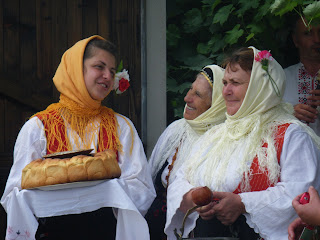 ny grain varieties grown in the area--we glimpsed the heart of Bulgaria and the depth of spirit of its' people. The mayor, along with passersby on the street greeted us, shook our hands, and welcomed us to their special place. We may not have understood their language, but their actions clearly communicated that we were welcome.
We toured the ‘community center,’ where villagers share books, art, theater, dance and stories, the mayor’s office, the local church (where we were moved by hymns sung by the priest), and finally the mayor’s home. There, we were treated to a 14-course feast of local foods, many of which were grown in the village’s organic garden. The food was prepared in a wood oven and cooked by the local village women. These same women also shared their circle dances, native crafts, lively music, and silly jokes.
This trip epitomizes what Semester at Sea is all about—a glimpse into the lives of everyday people where we saw not only the uniqueness of their culture and earth-based living, but also a reflection of our own visions of a slower, simpler life focused on the importance of family, friends, rich conversation, and healthy food enjoyed at a pace that allows us to savor it all.
(Rocky Rohwedder teachers a shipboard course on sustainable communities. You can follow his blog at www.sonoma.edu/ensp/rocky)
Sara Pecoraro, San Diego State University
I really enjoyed going to the Welcome Reception with the medical university students. My parents are from Central and South America and the educational systems are similar. In those countries, students declare their major or academic focus in high school and then go directly into university for that subject. I think it’s interesting that more countries are like that than like they are in the U.S.
I also appreciated how incredibly friendly the students at the medical university were. I felt like a saw a real part of Bulgaria with the music, dancing and just watching the Bulgarian students hang out with one another. And, I really enjoyed speaking with students who are around my age, but from another country and culture.
William Moore, Marquette University (Roamed throughout Varna)
Personally, it wasn’t my favorite port, but the one thing that I liked out of Varna, I liked the way the city was designed. I liked the way everything was juxtaposed because you had art museums in parks. The construction of the city was beautiful, even the low-income housing I thought the way that was put together was very nice. However, I didn’t have the best experiences with the people. But I could see Varna being the place to go to for private time. I walked around Varna and sat down and wrote in my journal. I wanted to feel the pulse of the city by walking around it. I really found things by walking around on my own which is the same way I walked through Spain. Bulgaria was a place that I had read about because I’ve always loved Slavic languages and life, so I did research before so I could discover the place on my own.
David Swerdlow, Semester at Sea Faculty
The Shabla fishing village has never been a site for tourists, our tour guide Lyuba tells us. Lyuba clearly loves her country, including this old fishing village, which she has chosen for us. She wants to give us a behind the scenes look at her country. Ours is the first tour bus to come down this road. We’re a group of nearly 30 people. Lyuba is nervous that we’ll find this village to be a backwards place, that we’ll be uncomfortable with its primitive toilets and lack of technology, that we’ll suffer in its heat. What she doesn’t know is that many of us are anxious to leave comfortable tourism behi nd. This is exactly the kind of experience we yearn for.
The first person we meet in Shabla is the oldest fisherman in town. He’s shirtless, up on a ladder, painting a sign. Lyuba gets his attention and asks if he’d like to talk to us. He turns to us, and we see his broad grin gleaming against his fisherman’s tan. He tells us that he’s making a sign to let people know that he has rooms to rent. Not only is he the oldest fisherman in town--he jokes--he’s the owner of the only hotel. Climbing back up his ladder and beginning to paint the next letter, he looks at his brush, waves it in our direction, and tells us that now he’s the town artist as well. It’s impossible not to laugh along with this good-natured man. As we walk through the communist era homes, we meet several other villagers who chat comfortably with us about their lives. They show us their fishing boats that the old men know how to build from oak trees. They’re afraid it’s a dying art in Shabla.
Eventually, we come to the home of the family that is preparing a picnic for us. We meet their dog. We see their chickens. We admire their garden. Proudly, they give us tomatoes, peppers, and cucumbers to taste. They are delicious.
Along the coast, just past the fishermen’s makeshift shacks, we come to the site of our picnic. Amidst the gorgeous formations of limestone that line the clear water of the Black Sea, our fisherman family has found three flat places to set three lovely tables. Each table has its own large umbrella and portion of chairs. Two empty chairs are by themselves, facing the sea, with their legs partially covered by the water. The table cloths and umbrellas flap elegantly in t he light breeze.
Our meal is stunning. That morning, the family fished for us. We eat fresh steamed mussels, fried smelts, grilled mackerel, and quick fried sea snails. The tomato salad is fresh from their garden, as are the potatoes and fried zucchini. There are hearty loves of bread. There’s an incredible fish soup that we drink eagerly. There’s beer and soft drinks. At the end, the men carve watermelons for us. We cannot finish it all, as much as we try. In truth, it’s one of our best meals of the summer, if not the best. It is made with care, and we realize that we’ve not been treated as tourists. We’ve been treated as friends, and we reciprocate. At the end of our lunch, many thanks are given. Hugs and kisses are offered and received. As our bus pulls away from Shabla, our Bulgarian family is waving, and so are we.
Eric Brindle, Univ. of Pittsburgh (Jeep Safari in Rural Bulgaria)
First experience studying abroad. I went on the Jeep Safari tour and that was a lot of fun. I’m not sure where we were, but it was this wooded area with a bunch of open fields. I thought Bulgaria was nice, I really liked it there. It was kind of more laid back than the other countries we’ve visited and I kind of enjoyed that part.
 and staff visiting Bulgaria was a time to relax in the fairly quiet port city of Varna. Students met with Bulgarian college students, visited orphanages, took jeep safaris to rural areas, toured UNESCO sites, and were first-time visitors to small Bulgarian villages eager to welcome them. Below are some reflections of both faculty and students on their Bulgarian experiences. And, click on the short video at the end to see some photos. Be sure to check the Semester At Sea website for the longer audio slideshow.
Rocky Rohwedder, Semester at Sea Faculty (Visited a Bulgarian village)
If you solely based your impressions of Bulgaria on the port city of Varna, it might be easy to typecast the country as just another former Soviet territory struggling with its identity and becoming a free-market economy. However, after a trip to the rural countryside, a far richer story begins to emerge. It’s a story of people deeply connected to their historical roots, their local community, and what today we might call sustainable living.
As part of an SAS trip to a small village on the Doubroudza plain--considered the breadbasket of Bulgaria because of the ma
 ny grain varieties grown in the area--we glimpsed the heart of Bulgaria and the depth of spirit of its' people. The mayor, along with passersby on the street greeted us, shook our hands, and welcomed us to their special place. We may not have understood their language, but their actions clearly communicated that we were welcome.
We toured the ‘community center,’ where villagers share books, art, theater, dance and stories, the mayor’s office, the local church (where we were moved by hymns sung by the priest), and finally the mayor’s home. There, we were treated to a 14-course feast of local foods, many of which were grown in the village’s organic garden. The food was prepared in a wood oven and cooked by the local village women. These same women also shared their circle dances, native crafts, lively music, and silly jokes.
This trip epitomizes what Semester at Sea is all about—a glimpse into the lives of everyday people where we saw not only the uniqueness of their culture and earth-based living, but also a reflection of our own visions of a slower, simpler life focused on the importance of family, friends, rich conversation, and healthy food enjoyed at a pace that allows us to savor it all.
(Rocky Rohwedder teachers a shipboard course on sustainable communities. You can follow his blog at www.sonoma.edu/ensp/rocky)
Sara Pecoraro, San Diego State University
I really enjoyed going to the Welcome Reception with the medical university students. My parents are from Central and South America and the educational systems are similar. In those countries, students declare their major or academic focus in high school and then go directly into university for that subject. I think it’s interesting that more countries are like that than like they are in the U.S.
I also appreciated how incredibly friendly the students at the medical university were. I felt like a saw a real part of Bulgaria with the music, dancing and just watching the Bulgarian students hang out with one another. And, I really enjoyed speaking with students who are around my age, but from another country and culture.
William Moore, Marquette University (Roamed throughout Varna)
Personally, it wasn’t my favorite port, but the one thing that I liked out of Varna, I liked the way the city was designed. I liked the way everything was juxtaposed because you had art museums in parks. The construction of the city was beautiful, even the low-income housing I thought the way that was put together was very nice. However, I didn’t have the best experiences with the people. But I could see Varna being the place to go to for private time. I walked around Varna and sat down and wrote in my journal. I wanted to feel the pulse of the city by walking around it. I really found things by walking around on my own which is the same way I walked through Spain. Bulgaria was a place that I had read about because I’ve always loved Slavic languages and life, so I did research before so I could discover the place on my own.
David Swerdlow, Semester at Sea Faculty
The Shabla fishing village has never been a site for tourists, our tour guide Lyuba tells us. Lyuba clearly loves her country, including this old fishing village, which she has chosen for us. She wants to give us a behind the scenes look at her country. Ours is the first tour bus to come down this road. We’re a group of nearly 30 people. Lyuba is nervous that we’ll find this village to be a backwards place, that we’ll be uncomfortable with its primitive toilets and lack of technology, that we’ll suffer in its heat. What she doesn’t know is that many of us are anxious to leave comfortable tourism behi
 nd. This is exactly the kind of experience we yearn for.
The first person we meet in Shabla is the oldest fisherman in town. He’s shirtless, up on a ladder, painting a sign. Lyuba gets his attention and asks if he’d like to talk to us. He turns to us, and we see his broad grin gleaming against his fisherman’s tan. He tells us that he’s making a sign to let people know that he has rooms to rent. Not only is he the oldest fisherman in town--he jokes--he’s the owner of the only hotel. Climbing back up his ladder and beginning to paint the next letter, he looks at his brush, waves it in our direction, and tells us that now he’s the town artist as well. It’s impossible not to laugh along with this good-natured man. As we walk through the communist era homes, we meet several other villagers who chat comfortably with us about their lives. They show us their fishing boats that the old men know how to build from oak trees. They’re afraid it’s a dying art in Shabla.
Eventually, we come to the home of the family that is preparing a picnic for us. We meet their dog. We see their chickens. We admire their garden. Proudly, they give us tomatoes, peppers, and cucumbers to taste. They are delicious.
Along the coast, just past the fishermen’s makeshift shacks, we come to the site of our picnic. Amidst the gorgeous formations of limestone that line the clear water of the Black Sea, our fisherman family has found three flat places to set three lovely tables. Each table has its own large umbrella and portion of chairs. Two empty chairs are by themselves, facing the sea, with their legs partially covered by the water. The table cloths and umbrellas flap elegantly in t
 he light breeze.
Our meal is stunning. That morning, the family fished for us. We eat fresh steamed mussels, fried smelts, grilled mackerel, and quick fried sea snails. The tomato salad is fresh from their garden, as are the potatoes and fried zucchini. There are hearty loves of bread. There’s an incredible fish soup that we drink eagerly. There’s beer and soft drinks. At the end, the men carve watermelons for us. We cannot finish it all, as much as we try. In truth, it’s one of our best meals of the summer, if not the best. It is made with care, and we realize that we’ve not been treated as tourists. We’ve been treated as friends, and we reciprocate. At the end of our lunch, many thanks are given. Hugs and kisses are offered and received. As our bus pulls away from Shabla, our Bulgarian family is waving, and so are we.
Eric Brindle, Univ. of Pittsburgh (Jeep Safari in Rural Bulgaria)
First experience studying abroad. I went on the Jeep Safari tour and that was a lot of fun. I’m not sure where we were, but it was this wooded area with a bunch of open fields. I thought Bulgaria was nice, I really liked it there. It was kind of more laid back than the other countries we’ve visited and I kind of enjoyed that part.
Subscribe to:
Posts (Atom)


 Posts
Posts

